
Semaglutide vs. Tirzepatide: Which GLP-1 Weight Loss Medication Is Right for You?
Semaglutide vs. tirzepatide: a friendly, plain-English comparison of the two leading GLP-1 weight loss medications — how they work, what the SURMOUNT-5 trial found, side effects, and how to choose with a clinician.
Dr. Elena Marsh
Endocrinologist

If you've been researching medical weight loss, you've probably come across two names again and again: semaglutide and tirzepatide. Both have transformed how healthcare professionals approach obesity treatment, and both can support meaningful, lasting weight reduction. But in a semaglutide vs. tirzepatide comparison, the details genuinely matter — these medications work differently inside your body, and one may suit your health history and goals better than the other.
So which is better for weight loss? In the SURMOUNT-5 clinical trial published in 2025, adults taking tirzepatide lost an average of 20.2% of their starting body weight, compared with 13.7% for those taking semaglutide, over 72 weeks. That's a real difference — but greater average weight loss doesn't automatically make tirzepatide the right choice for everyone.
In this guide, we'll compare how each medication works, what results real clinical trials show, what side effects to expect, and the questions worth asking a clinician before you choose. If you're new to this class of medications, our GLP-1 weight loss guide is a great place to start.

What's the Difference Between Semaglutide and Tirzepatide?
The biggest difference comes down to mechanism — how each medication interacts with your body's hormone receptors. Both belong to a class of drugs called incretin-based therapies, but they don't target the exact same pathways.
Semaglutide: A GLP-1 Receptor Agonist
Semaglutide belongs to a class of prescription medications called GLP-1 receptor agonists. GLP-1 stands for glucagon-like peptide-1, a hormone your gut releases after eating that's involved in appetite regulation, feelings of fullness, and blood sugar control.
By activating GLP-1 receptors, semaglutide helps regulate hunger and food intake, making it easier for many people to follow a reduced-calorie eating plan. Semaglutide is the active ingredient in several FDA-approved medications:
- Wegovy — FDA-approved for weight management in eligible adults, available as both a weekly injection and a daily oral tablet
- Ozempic — FDA-approved for type 2 diabetes and related indications
- Rybelsus — An oral semaglutide tablet approved for type 2 diabetes
Tirzepatide: A Dual GIP and GLP-1 Receptor Agonist
Tirzepatide works through two hormone receptors rather than one. It activates both GLP-1 receptors (appetite and glucose control) and GIP receptors (involved in metabolic and insulin-related signaling). This dual-receptor activity is the central pharmacological difference between tirzepatide and semaglutide.
Tirzepatide is the active ingredient in:
- Zepbound — FDA-approved for long-term weight management in eligible adults, and for moderate-to-severe obstructive sleep apnea in adults with obesity
- Mounjaro — FDA-approved for type 2 diabetes
Both medications are intended to be used under medical supervision alongside lifestyle changes. Think of it this way: semaglutide turns one hormonal valve, while tirzepatide turns two. More isn't automatically better for every person, but it does help explain why tirzepatide tends to produce slightly more weight loss in head-to-head trials.
Semaglutide vs. Tirzepatide: Which Is More Effective for Weight Loss?
This is where the clinical evidence gets genuinely interesting. In 2025, researchers published the results of SURMOUNT-5, a randomized trial directly comparing injectable tirzepatide and semaglutide for weight loss.
The study enrolled 751 adults with obesity or overweight and at least one related health complication, none of whom had type 2 diabetes. Participants received either tirzepatide (at a maximum tolerated dose of 10 mg or 15 mg weekly) or semaglutide (at a maximum tolerated dose of 1.7 mg or 2.4 mg weekly), alongside lifestyle counseling, for 72 weeks.
The Head-to-Head Results
Here's what the trial found:
- Average body weight reduction: tirzepatide 20.2% vs. semaglutide 13.7%
- Average waist circumference reduction: tirzepatide 18.4 cm vs. semaglutide 13.0 cm
- Participants losing at least 10% of body weight: tirzepatide 81.6% vs. semaglutide 60.5%
- Participants losing at least 15% of body weight: tirzepatide 64.6% vs. semaglutide 40.1%
- Participants losing at least 20% of body weight: tirzepatide 48.4% vs. semaglutide 27.3%
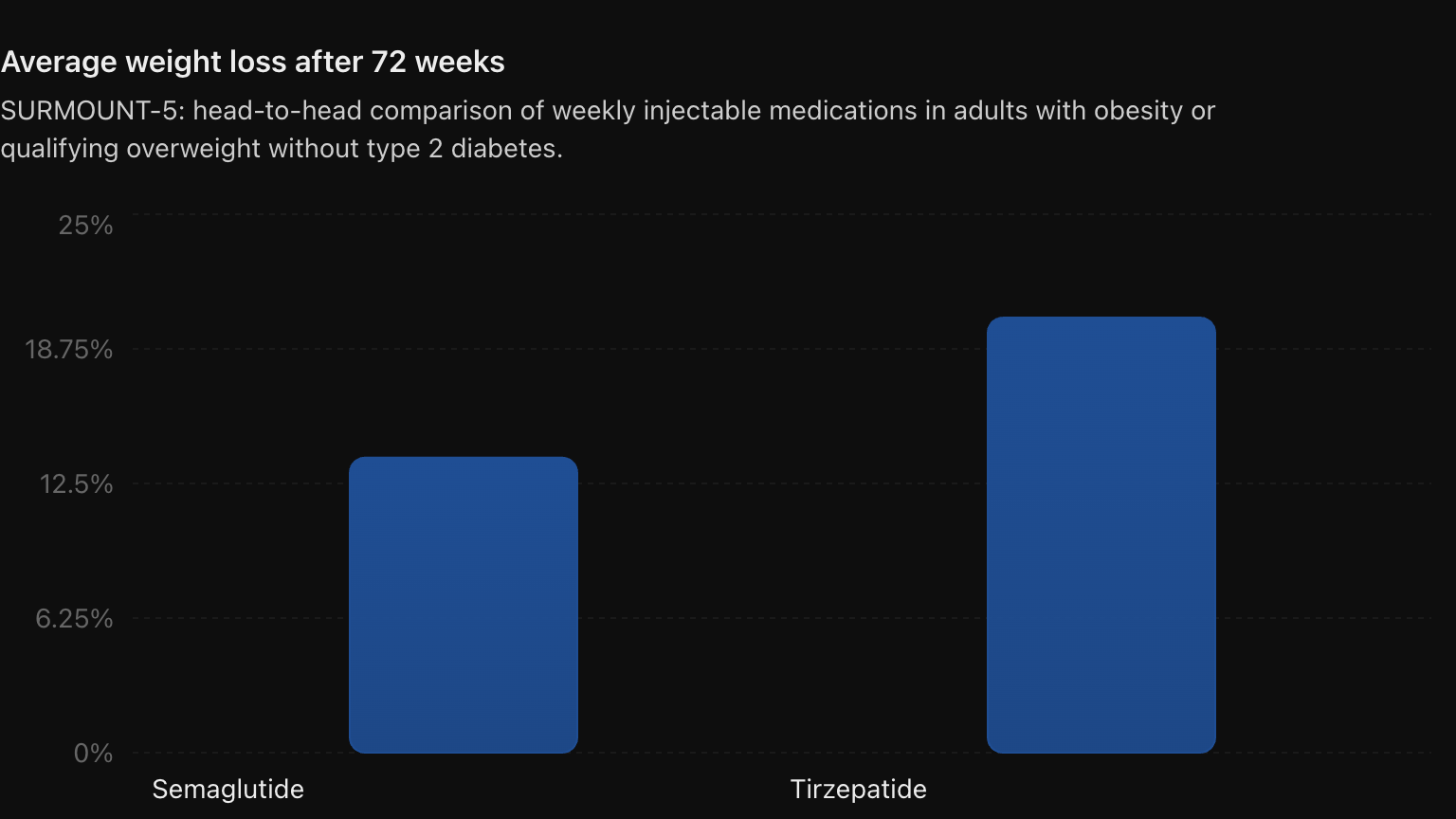
What does this mean for you? Tirzepatide produced 6.5 percentage points more average weight loss than injectable semaglutide in this trial. For a 200-pound person, that's roughly 40 pounds with tirzepatide versus 27 pounds with semaglutide — though these are mathematical illustrations, not predictions of your individual results.
It's worth noting the study was open-label (participants and researchers knew which treatment was assigned) and was funded by Eli Lilly, the manufacturer of Zepbound. It also didn't compare oral Wegovy tablets or compounded formulations. You can read the full results in the New England Journal of Medicine.
Tirzepatide demonstrated superior average weight loss in SURMOUNT-5. But both medications produced meaningful results, and your own response may be different.
Semaglutide vs. Tirzepatide: A Side-by-Side Comparison
Here's a quick reference for how the two medications compare:
- Medication class: Semaglutide is a GLP-1 receptor agonist; tirzepatide is a dual GIP/GLP-1 receptor agonist
- FDA-approved weight-management brand: Wegovy (semaglutide) and Zepbound (tirzepatide)
- Mechanism: Semaglutide activates one receptor pathway; tirzepatide activates two
- Available forms: Semaglutide offers a weekly injection or daily oral tablet; tirzepatide is a weekly injection
- Average weight loss in SURMOUNT-5: 13.7% (semaglutide) vs. 20.2% (tirzepatide)
- Common side effects: Both — nausea, diarrhea, vomiting, constipation
- Prescription and medical supervision required: Yes, for both
The Benefits of Semaglutide for Weight Loss
Semaglutide has several features that may make it the right treatment option for you.
Clinically Demonstrated Weight Reduction
The SURMOUNT-5 trial found an average 13.7% reduction in body weight at 72 weeks among participants on injectable semaglutide. For many people living with obesity, a reduction of this magnitude is clinically meaningful and can transform how you feel day to day.
An FDA-Approved Cardiovascular Risk-Reduction Indication
Wegovy carries an FDA-approved indication to reduce major adverse cardiovascular events — including heart attack, stroke, and cardiovascular death — in certain adults with established cardiovascular disease and obesity or overweight. This can be an important factor in individualized treatment planning, though it doesn't mean semaglutide is right for every patient with cardiovascular disease. You can review the details in the FDA prescribing information for Wegovy.
Injectable and Oral Treatment Options
If injections aren't your thing, the availability of FDA-approved Wegovy tablets gives you an alternative worth discussing with your clinician. Unlike the weekly injectable, Wegovy tablets are taken daily on an empty stomach, with specific instructions about waiting before food or other medications.
The Benefits of Tirzepatide for Weight Loss
Tirzepatide also offers significant potential benefits.
Greater Average Weight Loss in a Direct Comparison
The headline finding from SURMOUNT-5: tirzepatide produced greater average weight loss than injectable semaglutide over the same 72-week period. More tirzepatide participants also hit the 15%, 20%, and 25% weight-loss thresholds.
Greater Waist Circumference Reduction
Tirzepatide participants saw an average waist circumference reduction of 18.4 cm, compared with 13.0 cm for semaglutide. Waist circumference is one measure clinicians use to evaluate weight-related health risks.
An Additional Sleep Apnea Indication
Zepbound is also FDA-approved to treat moderate-to-severe obstructive sleep apnea in adults with obesity. If you're managing both weight and sleep apnea, that dual indication may influence your treatment discussion. The FDA prescribing information for Zepbound covers the details.
Weight-loss effectiveness alone isn't a complete picture of a medication's safety, health benefits, or suitability for a particular patient. The best medication is the one that's clinically appropriate for you.
What Side Effects Can You Expect With Semaglutide and Tirzepatide?
Like all prescription medications, semaglutide and tirzepatide have potential side effects. The most frequently reported are gastrointestinal:
- Nausea and vomiting
- Diarrhea or constipation
- Abdominal pain or discomfort
- Indigestion and feelings of fullness
Digestive symptoms are especially common when treatment begins or the dose increases. In SURMOUNT-5, most adverse events were mild to moderate, and gastrointestinal symptoms led in both groups. The good news: these usually ease as your body adjusts — which is exactly why providers titrate the dose up gradually. If you want help managing appetite and nutrition changes while on these medications, our protein for weight loss guide walks through how to keep your nutrition solid.
Important Safety Warnings
Both Wegovy and Zepbound carry an FDA boxed warning related to thyroid C-cell tumors observed in rodents. Whether these medications cause such tumors in humans remains unknown. Neither should be used by someone with a personal or family history of medullary thyroid carcinoma (MTC) or multiple endocrine neoplasia syndrome type 2 (MEN 2).
Other potential risks include pancreatitis, gallbladder problems, dehydration-related kidney injury, severe gastrointestinal reactions, and serious allergic reactions. Tirzepatide has an additional consideration: it can reduce the effectiveness of oral hormonal contraceptives, so the labeling recommends a barrier method or non-oral contraception for four weeks after starting and after each dose increase.
These medications are not intended for weight loss during pregnancy. Always have a licensed prescriber review your full medical history and medication list before starting. If you experience severe persistent abdominal pain, significant vomiting, or signs of a serious allergic reaction, seek medical care promptly.
How Do You Know Which Weight-Loss Medication Is Right for You?
The answer depends on more than which medication posted the highest average weight-loss number. A healthcare professional will consider your current health status, medical and family history, personal goals, treatment preferences, response to previous treatments, and cost or insurance coverage.
- Your health status: weight, blood sugar history, cardiovascular health, and other diagnoses
- Your medical history: certain thyroid conditions, pregnancy plans, gastrointestinal disorders
- Your goals: realistic, measurable targets within an ongoing plan
- Your preferences: weekly injection vs. daily oral tablet
- Your previous experience: if you've tried a GLP-1 before, your results and side effects matter
The best medication isn't necessarily the one with the largest average result. It's the treatment that's clinically appropriate for you — and that's a decision to make with a clinician who knows your full history. For more on pairing medication with sustainable habits, see our movement that sticks guide and our breakdown of common metabolism myths.
What About Compounded Semaglutide and Tirzepatide?
You may have seen compounded versions advertised through weight-loss clinics or telehealth providers. There's an important distinction: compounded semaglutide and tirzepatide are not FDA-approved medications. The FDA does not evaluate compounded products for safety, effectiveness, or quality before they're marketed, and they are not equivalent to FDA-approved generics.
The FDA advises that compounded GLP-1 medications should be considered only when a patient's medical needs can't be met by an FDA-approved drug. Following the resolution of national shortages, additional regulatory restrictions apply to compounded versions that are essentially copies of commercially available products. The SURMOUNT-5 results cannot be applied to compounded medications, because those products weren't tested in the trial. If you're considering any prescription weight-management medication, ask your healthcare professional about its approval status, sourcing, and safety.
Frequently Asked Questions About Semaglutide and Tirzepatide
Is tirzepatide better than semaglutide for weight loss?
In SURMOUNT-5, injectable tirzepatide produced greater average weight loss — 20.2% vs. 13.7% after 72 weeks. But individual treatment decisions depend on safety considerations, medical history, and clinical goals.
Can you switch from semaglutide to tirzepatide?
A healthcare professional may consider switching based on effectiveness, tolerability, or other clinical factors. Never switch, combine, or calculate equivalent doses without guidance from a licensed prescriber.
Can you take semaglutide or tirzepatide without an injection?
FDA-approved oral semaglutide (Wegovy tablets) is available for weight management. Zepbound, the tirzepatide weight-management product, is administered by injection.
How long does it take to see weight-loss results?
Individual response varies with treatment, dose adjustments, lifestyle, and health status. The SURMOUNT-5 results reflect 72 weeks, not a few weeks. Your prescriber can set appropriate monitoring intervals.
Will insurance cover semaglutide or tirzepatide?
Coverage varies by health plan, specific medication, clinical indication, and authorization requirements. Contact your insurer to confirm coverage and out-of-pocket costs.
Key Takeaways: Semaglutide vs. Tirzepatide
- Tirzepatide (Zepbound) produced 20.2% average weight loss vs. 13.7% for semaglutide (Wegovy) in the SURMOUNT-5 trial — but both are effective.
- Semaglutide activates one hormone receptor (GLP-1); tirzepatide activates two (GLP-1 and GIP).
- Semaglutide offers an oral tablet option and a cardiovascular risk-reduction indication; tirzepatide offers a sleep apnea indication.
- Both share similar, mostly gastrointestinal side effects that ease as your dose is gradually increased.
- Compounded versions are not FDA-approved and aren't interchangeable with the tested medications.
- The right choice depends on your personal health picture — decided with a clinician, not a trial average.
For a broader look at how these medications fit into lasting change, the National Institute of Diabetes and Digestive and Kidney Diseases offers reliable, plain-language resources on weight management.
Medical disclaimer: This article is for educational purposes only and is not medical advice. Always consult a licensed healthcare professional before starting, changing, or stopping any treatment.
Related reading

Compounded GLP-1 vs. FDA-Approved GLP-1 Medications: Safety, Risks & Key Differences in 2026
Compounded GLP-1 vs. FDA-approved GLP-1 medications: a friendly, plain-English guide to safety, legality in 2026, 503A vs. 503B pharmacies, dosing risks, and questions to ask before starting.
Dr. Elena Marsh
Endocrinologist

GLP-1 Medications: A Complete Guide to Safe, Sustainable Weight Loss
GLP-1 receptor agonists have transformed obesity medicine. Here's a friendly, plain-English guide to how they work, who they're for, and how to use them alongside lasting lifestyle change.
Dr. Elena Marsh
Endocrinologist
Five Metabolism Myths That Are Sabotaging Your Weight Loss Progress
From 'eating six meals speeds metabolism' to 'cardio is king,' let's separate the science from the folklore so you can stop wasting effort and start seeing results.
Nadia Brooks, RD
Registered Dietitian