
Five Metabolism Myths That Are Sabotaging Your Weight Loss Progress
From 'eating six meals speeds metabolism' to 'cardio is king,' let's separate the science from the folklore so you can stop wasting effort and start seeing results.
Nadia Brooks, RD
Registered Dietitian
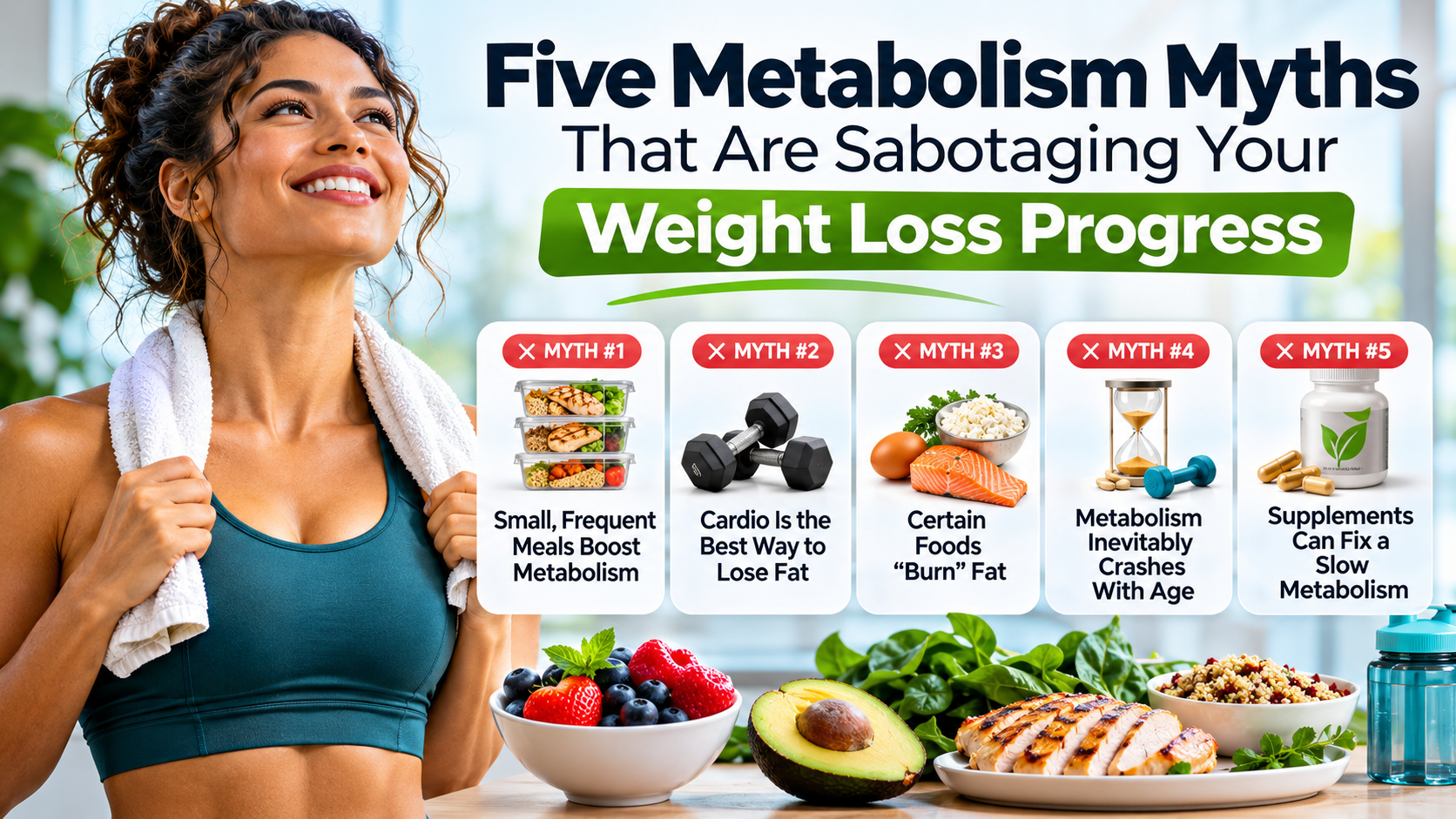
Metabolism is one of the most misunderstood topics in health, and the myths around it quietly derail a lot of good intentions. You've probably heard at least a few of these — maybe even built your routine around them. Let's clear up the five metabolism myths that sabotage progress, so you can focus on what actually moves the needle for weight loss.
Myth 1: Small, Frequent Meals Boost Metabolism
The idea that eating six small meals "stokes your metabolic fire" sounds logical, but the science doesn't back it. Meal frequency has a negligible effect on metabolic rate. What matters far more is your total daily intake and the quality of the food you eat. If six mini-meals help you control portions, great — but it's not doing anything magical to your metabolism.
Myth 2: Cardio Is the Best Way to Lose Fat
Cardio absolutely burns calories and supports heart health, but if fat loss is your goal, resistance training is the underrated partner. Building muscle raises your resting metabolic rate, meaning you burn more energy even at rest. The two work best together. Our movement that sticks guide covers how to build a routine you'll actually keep.
Myth 3: Certain Foods 'Burn' Fat
No food has a meaningful negative-calorie effect. Some, like protein, slightly increase the energy cost of digestion (called the thermic effect of food), but the effect is small. The real metabolic advantage of protein is satiety — it keeps you full — which we dig into in protein for weight loss.
Myth 4: Metabolism Inevitably Crashes With Age
Metabolism does decline with age, but mostly because we lose muscle. Staying active and strong offsets much of that decline. The "inevitable crash" is far more about lifestyle shifts than an unavoidable biological fate.
Myth 5: Supplements Can Fix a Slow Metabolism
Most "metabolism boosters" have weak evidence behind them. Sleep, movement, and protein do the real work. For a clinician's take on which supplements are worth taking and which to skip, see our supplements guide.
If a metabolism claim sounds too good to be true, it probably is. Real metabolic health is built with sleep, food, and movement — not a pill.
The Harvard T.H. Chan School of Public Health is a trustworthy source for plain-language nutrition science that cuts through hype like this.
Key Takeaways
- Meal frequency doesn't meaningfully change your metabolic rate — total intake and food quality matter more.
- Resistance training builds the muscle that keeps your metabolism higher at rest.
- No food "burns" fat; protein's real power is keeping you full.
- Age-related metabolic decline is mostly muscle loss, which you can offset with strength training.
- Skip "metabolism booster" supplements — sleep, food, and movement do the work.
Medical disclaimer: This article is for educational purposes only and is not medical advice. Always consult a licensed healthcare professional before starting, changing, or stopping any treatment.
Related reading

Compounded GLP-1 vs. FDA-Approved GLP-1 Medications: Safety, Risks & Key Differences in 2026
Compounded GLP-1 vs. FDA-approved GLP-1 medications: a friendly, plain-English guide to safety, legality in 2026, 503A vs. 503B pharmacies, dosing risks, and questions to ask before starting.
Dr. Elena Marsh
Endocrinologist

Semaglutide vs. Tirzepatide: Which GLP-1 Weight Loss Medication Is Right for You?
Semaglutide vs. tirzepatide: a friendly, plain-English comparison of the two leading GLP-1 weight loss medications — how they work, what the SURMOUNT-5 trial found, side effects, and how to choose with a clinician.
Dr. Elena Marsh
Endocrinologist

GLP-1 Medications: A Complete Guide to Safe, Sustainable Weight Loss
GLP-1 receptor agonists have transformed obesity medicine. Here's a friendly, plain-English guide to how they work, who they're for, and how to use them alongside lasting lifestyle change.
Dr. Elena Marsh
Endocrinologist