Hydration and Health: More Than Just Drinking Water
Hydration affects energy, appetite, and performance. A practical, friendly guide to getting it right without overthinking it.
Nadia Brooks, RD
Registered Dietitian

Hydration is simple in principle and easy to get subtly wrong. It affects your energy, your appetite, and your performance — often more than people realize. Here's a practical, friendly guide to getting it right without overthinking it.
Why It Matters
Even mild dehydration affects mood, concentration, and perceived effort during exercise. It can also be mistaken for hunger, which is why staying hydrated quietly supports weight loss. It pairs with the appetite habits in our protein for weight loss guide.
How Much Is Enough
A reasonable starting point is around 2 to 3 liters a day from all sources, adjusted for climate, activity, and body size. Let thirst and urine color guide you — pale yellow is the target. You don't need an app, just a habit.
It's Not Just Water
Electrolytes, especially sodium, matter when you sweat heavily or eat a whole-food, lower-processed diet. A pinch of salt in your water can help on long active days. This matters for the movement habits in our movement that sticks guide.
Make It Easy
Keep a glass where you work. Visible cues beat willpower. Flavor with citrus or mint if plain water bores you — anything that makes drinking feel like a default rather than a chore.
The CDC hydration and water resources offer reliable, simple guidance on daily hydration.
Key Takeaways
- Even mild dehydration affects mood, focus, and exercise performance.
- Thirst can masquerade as hunger, so hydration quietly supports weight loss.
- Aim for 2–3 liters a day, adjusted for climate, activity, and body size.
- Electrolytes matter when you sweat heavily or eat a lower-processed diet.
- Keep water visible — visible cues beat willpower every time.
Medical disclaimer: This article is for educational purposes only and is not medical advice. Always consult a licensed healthcare professional before starting, changing, or stopping any treatment.
Related reading

Compounded GLP-1 vs. FDA-Approved GLP-1 Medications: Safety, Risks & Key Differences in 2026
Compounded GLP-1 vs. FDA-approved GLP-1 medications: a friendly, plain-English guide to safety, legality in 2026, 503A vs. 503B pharmacies, dosing risks, and questions to ask before starting.
Dr. Elena Marsh
Endocrinologist

Semaglutide vs. Tirzepatide: Which GLP-1 Weight Loss Medication Is Right for You?
Semaglutide vs. tirzepatide: a friendly, plain-English comparison of the two leading GLP-1 weight loss medications — how they work, what the SURMOUNT-5 trial found, side effects, and how to choose with a clinician.
Dr. Elena Marsh
Endocrinologist
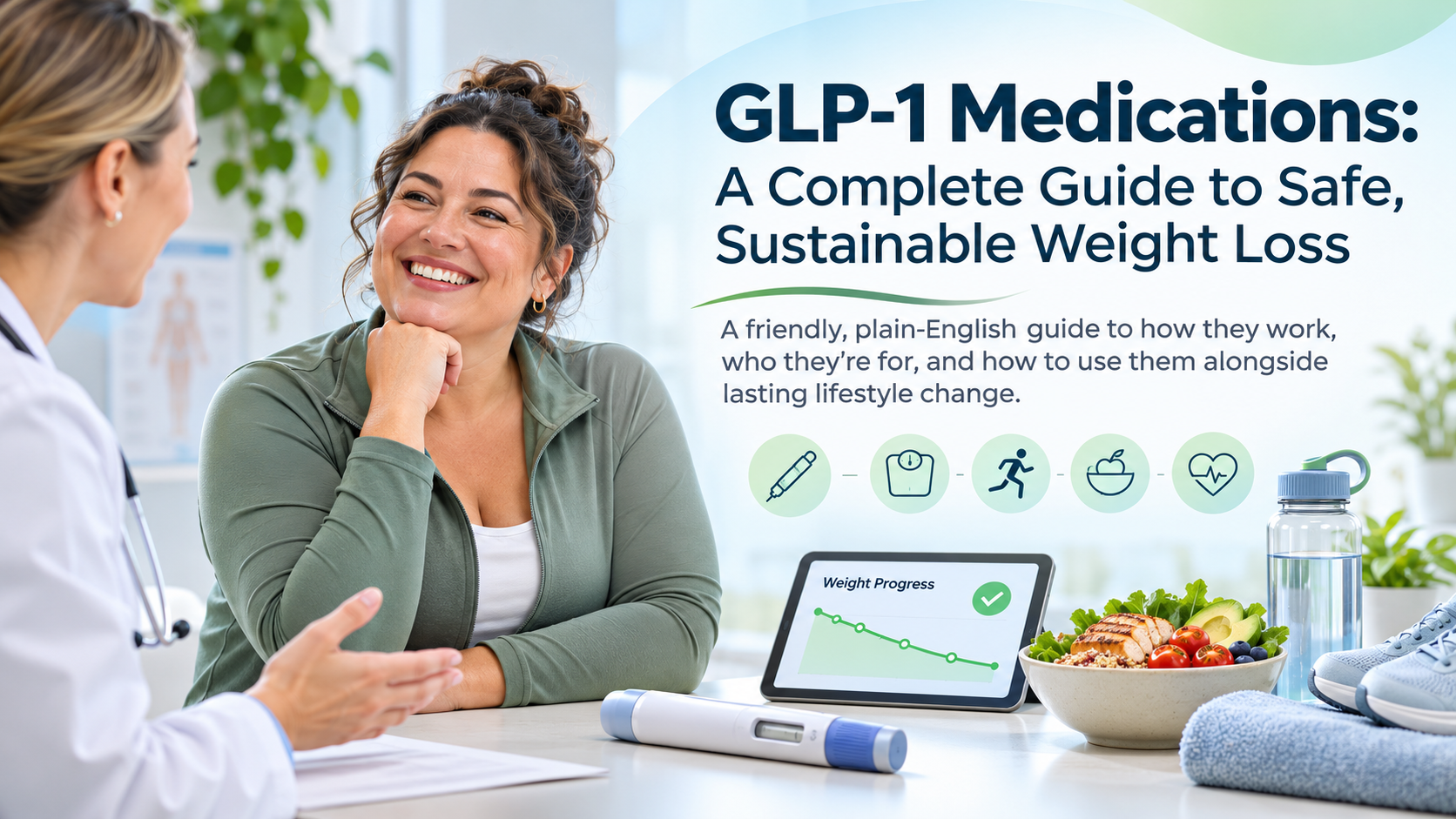
GLP-1 Medications: A Complete Guide to Safe, Sustainable Weight Loss
GLP-1 receptor agonists have transformed obesity medicine. Here's a friendly, plain-English guide to how they work, who they're for, and how to use them alongside lasting lifestyle change.
Dr. Elena Marsh
Endocrinologist